
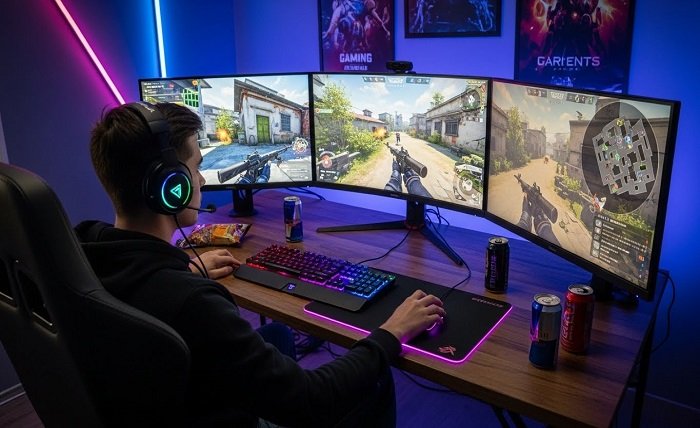
In today’s rapidly evolving digital age, online gaming has become a central part of everyday life for millions of people around the world. What was once seen as a simple recreational activity has transformed into a complex, interactive experience that engages the mind in powerful ways. With the rise of advanced technology, high-speed internet, and global connectivity, online games now offer more than just entertainment they provide opportunities for cognitive development, learning, and personal growth.
For many people, especially younger generations, online games are part of their daily routine. Whether played on a computer, console, or smartphone, these games create immersive environments where players can explore, compete, and collaborate. While concerns about screen time still exist, it is important to recognize that online gaming, when approached responsibly, can contribute positively to brain development and mental skills.
One of the most significant ways online gaming supports cognitive development is through active engagement. Unlike passive forms of entertainment such as watching television, gaming requires players to participate actively. They must make decisions, respond to challenges, and interact with dynamic environments. This constant engagement stimulates various parts of the brain, encouraging mental activity and growth.
Problem-solving is one of the key cognitive skills developed through online gaming. Many games are designed with challenges that require players to think critically and find solutions. These challenges may include solving puzzles, navigating complex environments, or defeating opponents with strategic planning. Players slot gacor often need to experiment with different approaches before achieving success, which strengthens their ability to think logically and creatively.
Memory is another important aspect of cognitive development that is enhanced through gaming. In many online games, players must remember a wide range of information, such as maps, objectives, character abilities, and strategies. This continuous use of memory helps strengthen the brain’s ability to store and retrieve information efficiently. Over time, players may notice improvements in their ability to recall details and organize information in everyday life.
Attention and concentration are also significantly improved through online gaming. Many games require players to focus on multiple elements simultaneously, such as tracking enemies, managing resources, and following objectives. This level of mental engagement trains the brain to maintain focus and filter out distractions. As a result, players can develop stronger attention skills that are useful in academic, professional, and personal settings.
Another important benefit of online gaming is the development of strategic thinking. Many games involve planning, decision-making, and anticipating future outcomes. Players must evaluate risks, consider different possibilities, and choose actions that will lead to the best results. This process strengthens critical thinking skills and encourages players to approach problems with a strategic mindset.
Online gaming also plays a role in improving reaction speed and coordination. Fast-paced games require players to respond quickly to visual and auditory cues. Whether it is avoiding obstacles or reacting to an opponent’s move, players must process information rapidly and act accordingly. This helps improve hand–eye coordination and enhances the brain’s ability to respond efficiently in real-time situations.
In addition to individual cognitive skills, online gaming also fosters social and communication abilities. Many slot depo 5k games include multiplayer modes where players interact with others from around the world. These interactions require teamwork, communication, and cooperation. Players often work together to achieve shared goals, share strategies, and support one another during gameplay.
This social aspect of gaming helps develop important interpersonal skills. Players learn how to communicate clearly, listen to others, and collaborate effectively. They also gain exposure to different cultures and perspectives, which can broaden their understanding of the world.
Creativity is another area where online gaming contributes to cognitive development. Many games allow players to explore open worlds, experiment with different strategies, and create their own content. This freedom encourages imaginative thinking and innovation. Players are not limited to a single path they can discover new possibilities and develop unique solutions to challenges.
Moreover, online gaming can also provide emotional benefits. Engaging in games can be a way to relax and reduce stress after a long day. The immersive nature of gaming allows players to temporarily escape from daily pressures and focus on enjoyable activities. This mental break can help improve mood and overall well-being.
However, it is essential to maintain a balanced approach to gaming. While online games offer many cognitive benefits, excessive gaming can lead to negative effects such as fatigue or reduced physical activity. Setting time limits, taking regular breaks, and maintaining a healthy lifestyle are important to ensure that gaming remains a positive experience.
Parents and educators can also play a role in guiding responsible gaming habits. By encouraging the selection of games that promote problem-solving, strategy, and creativity, they can help maximize the cognitive benefits of gaming. When used thoughtfully, online games can become valuable tools for learning and development.
As technology continues to advance, the future of online gaming looks even more promising. Innovations such as virtual reality, artificial intelligence, and immersive storytelling will create even more engaging and mentally stimulating experiences. These advancements will further enhance the potential of gaming as a tool for cognitive development.
In conclusion, online gaming in the digital age is far more than just a form of entertainment. It is an interactive and dynamic activity that can support cognitive development in multiple ways. From improving problem-solving and memory to enhancing focus, strategy, and social skills, online games offer a wide range of benefits for the brain.
When approached with balance and awareness, gaming can become a powerful tool for personal growth. It demonstrates that learning and development do not always have to come from traditional methods. Sometimes, the most effective learning happens through engaging, interactive experiences that challenge the mind.
Ultimately, online gaming represents a new frontier in cognitive development. It combines technology, creativity, and human interaction to create experiences that are both enjoyable and meaningful. In this digital age, games are not just about winning or losing they are about learning, growing, and discovering the full potential of the human mind.